A WARDROBE IN METAMORPHOSIS
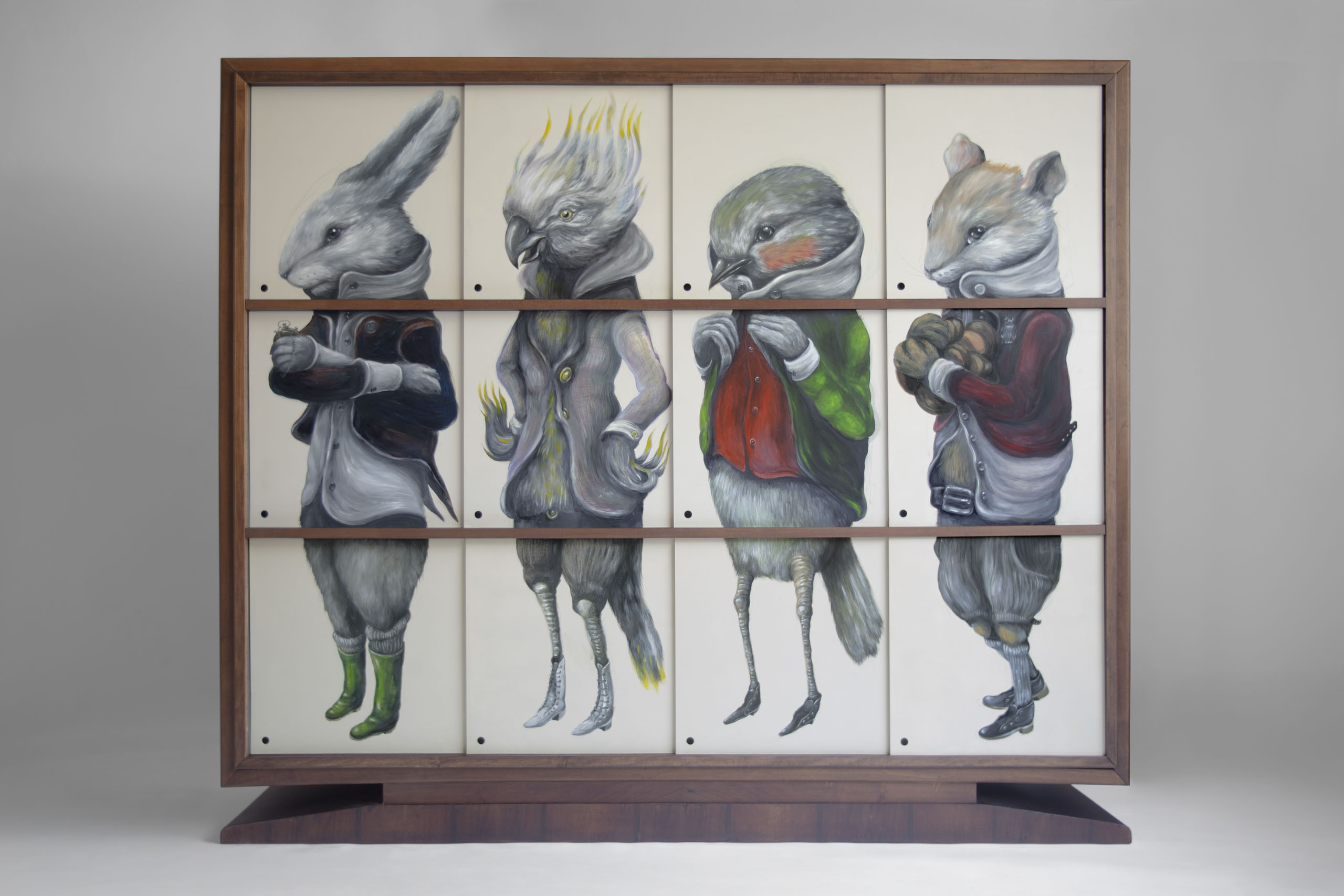
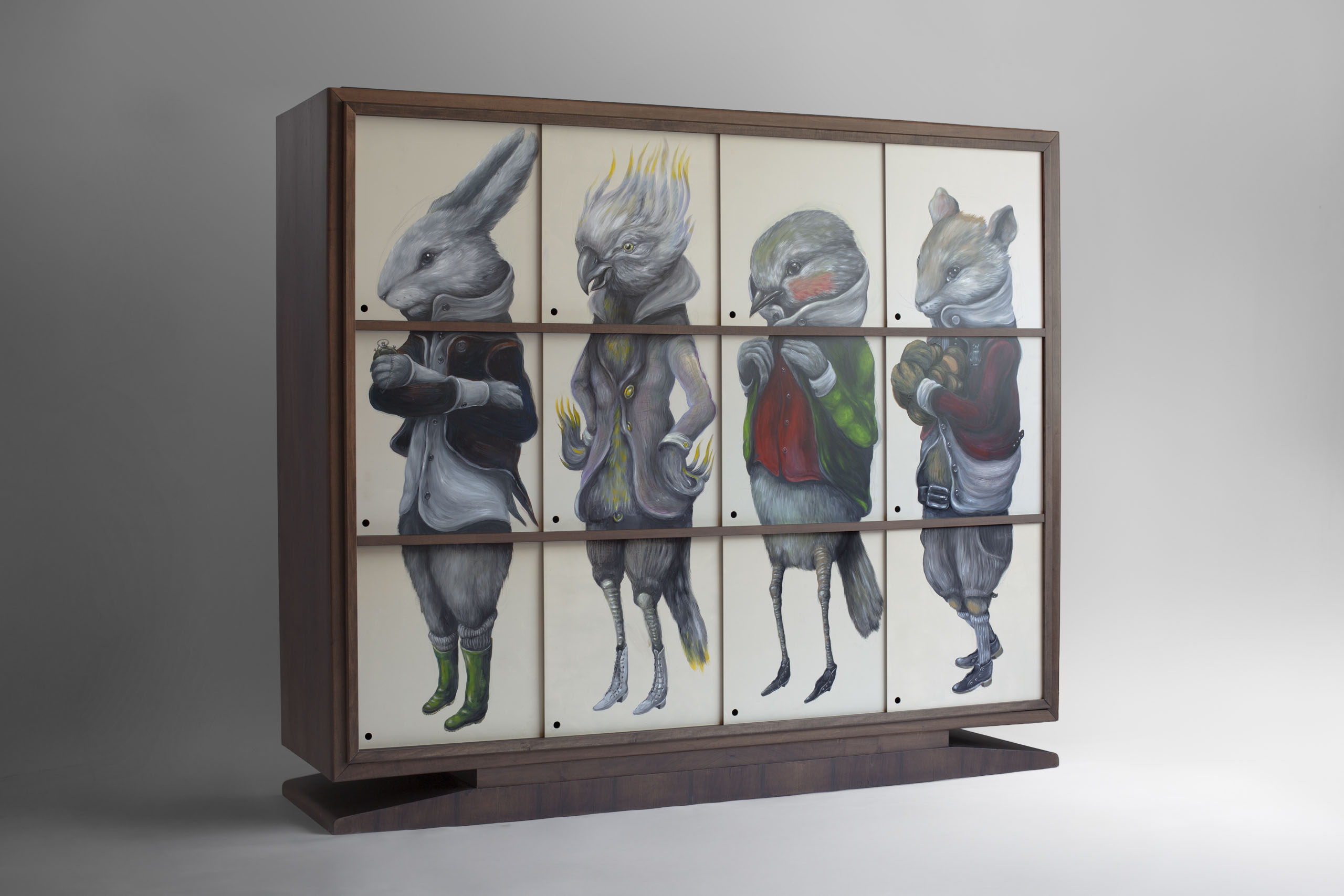
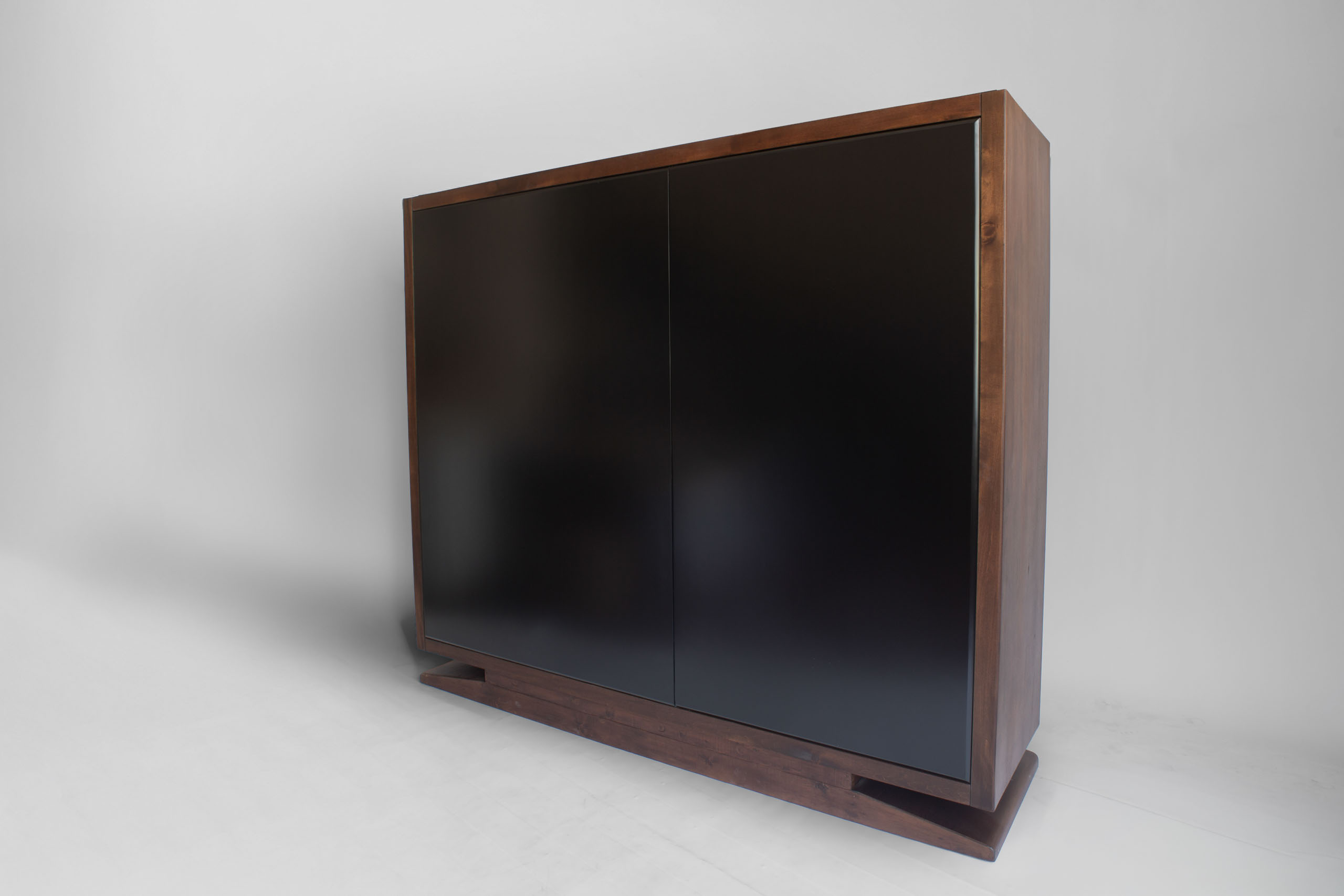
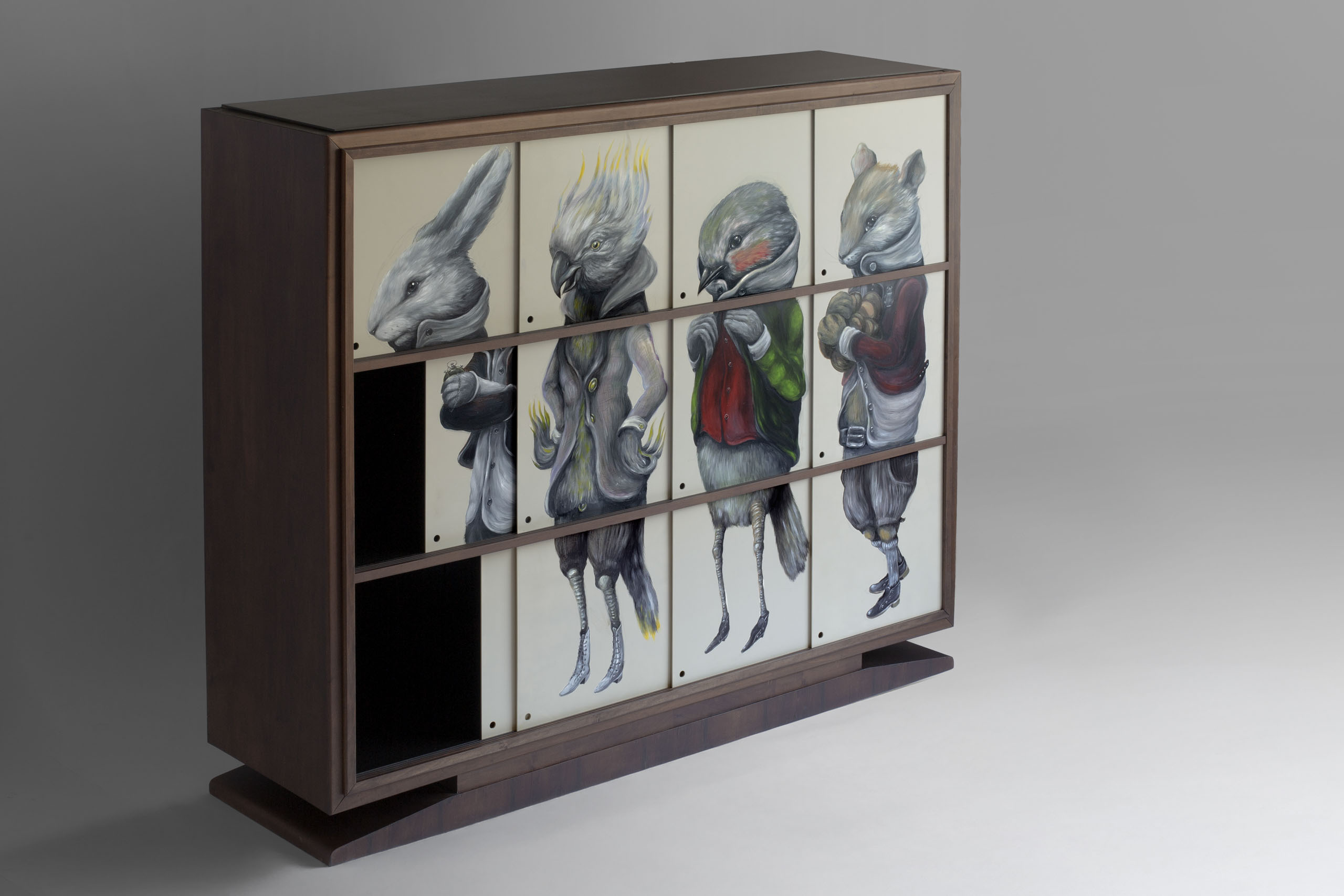
Vestiario Bestiario is a 1940s Italian wardrobe, selected for its proportions and frontal presence, which already suggested the surface of a large painting. Its interior is reimagined through twelve sliding panels hand-painted by Ericailcane.
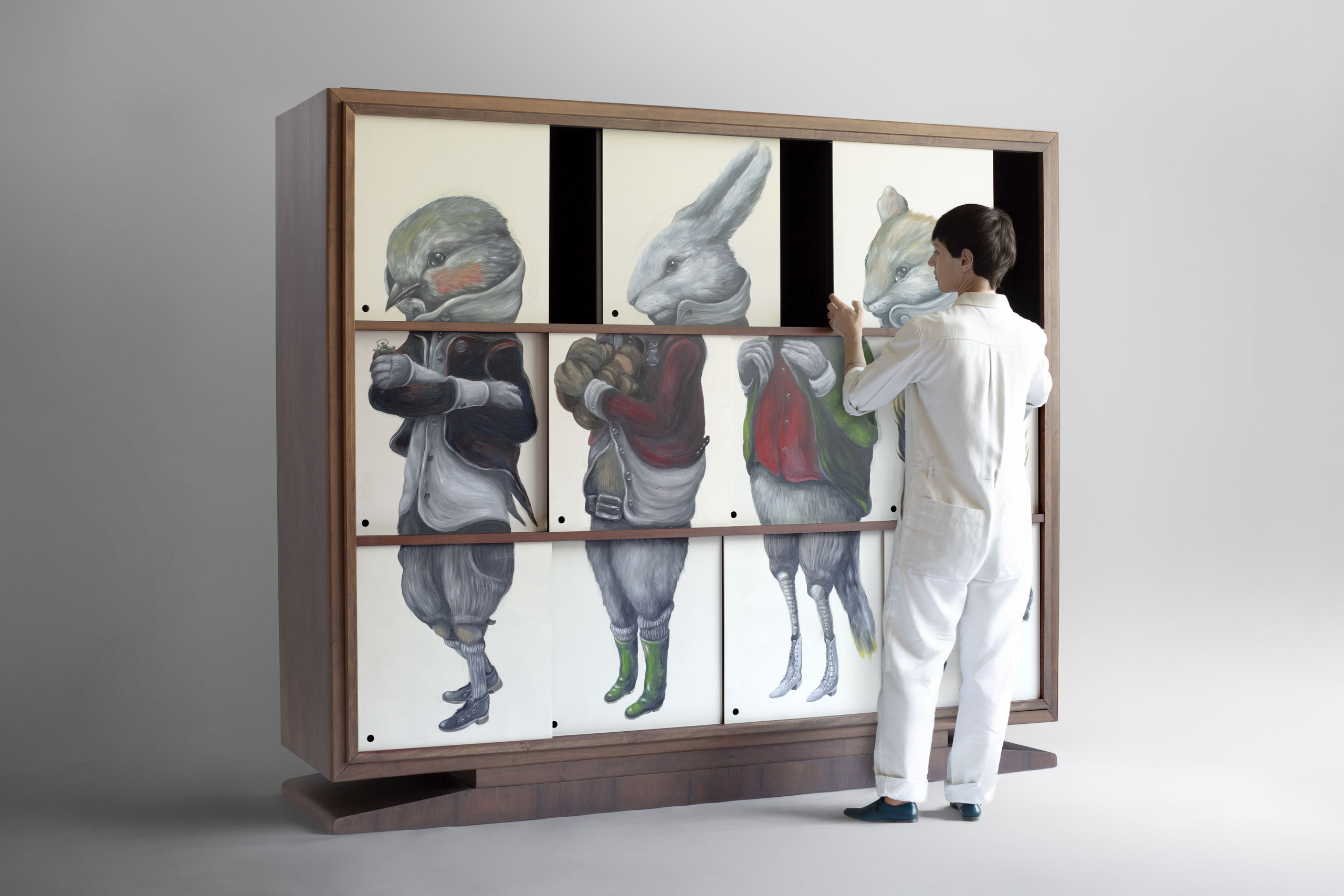
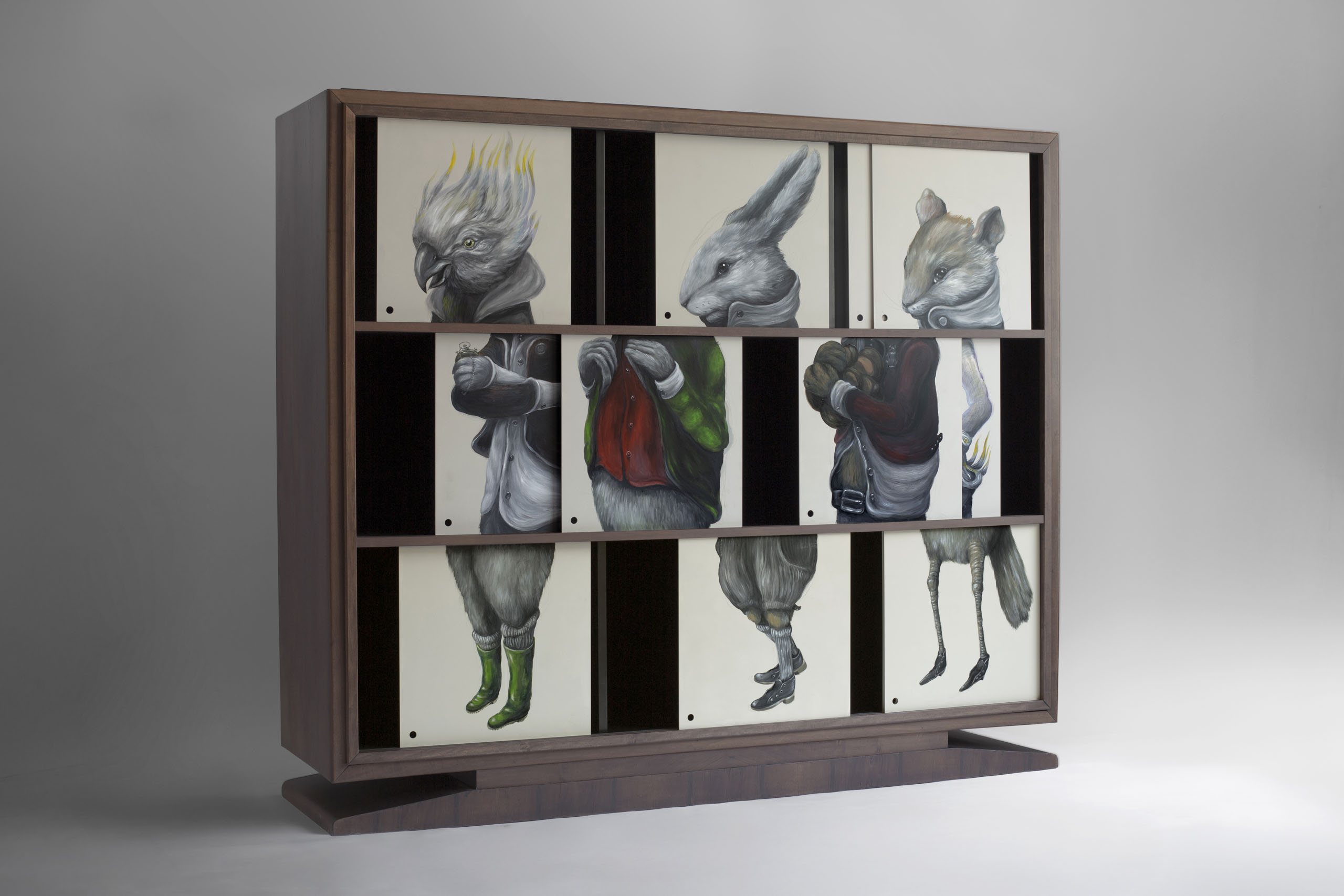
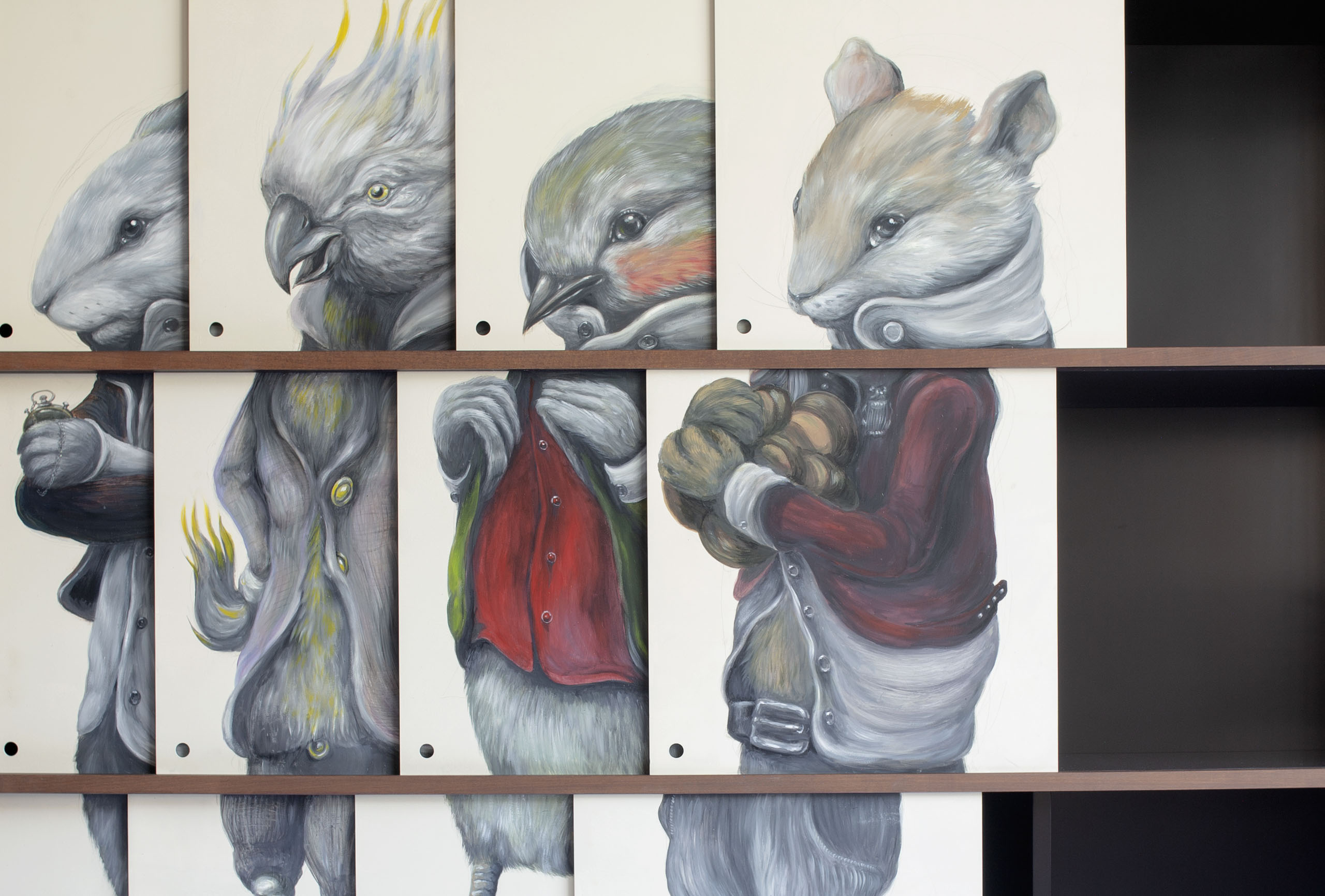
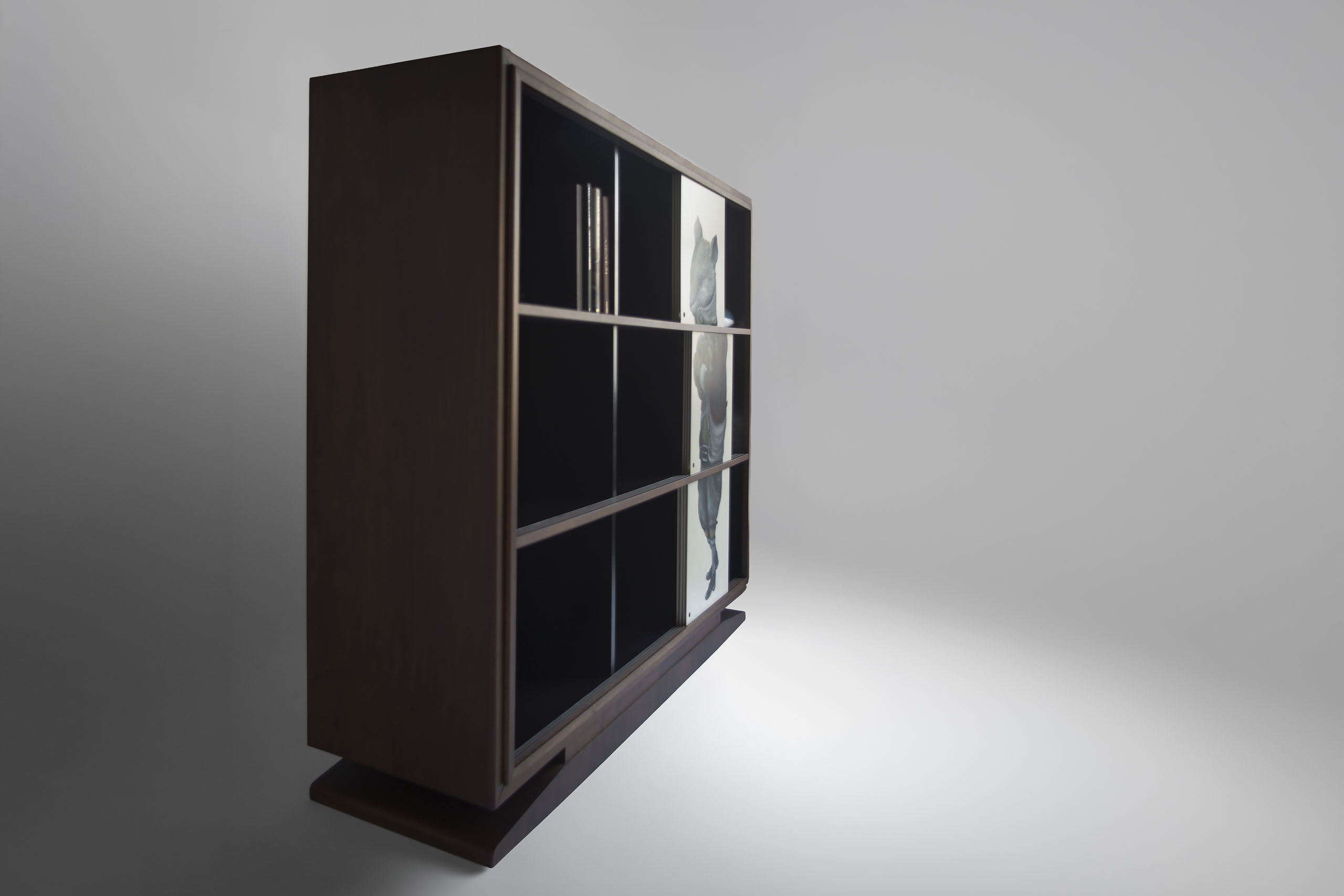
Arranged across three horizontal rows, four heads, four bodies and four pairs of legs can be combined in sixty-four different ways. Drawn from Ericailcane’s bestiary, a rabbit, a cockatoo, a robin and a mouse exchange heads, bodies and legs as the panels move across the structure. With each movement, the composition shifts, creating an image that never appears in quite the same way twice, in a perpetual play of changing garments and identities.
Unique piece. Manoteca & Ericailcane.
WIDTH 225 cm 88.6 in
DEPTH 61 cm 24 in
HEIGHT 194 cm 76.4 in
Vestiario bestiario is an 1940s Italian wardrobe reimagined as a kinetic cabinet through twelve sliding panels hand-painted by Ericailcane, creating an image in perpetual transformation.
Wardrobe: the exterior preserves its original form. Inside, three horizontal registers supports twelve hand-painted sliding Dibond panels, allowing the image shifts with each movement.
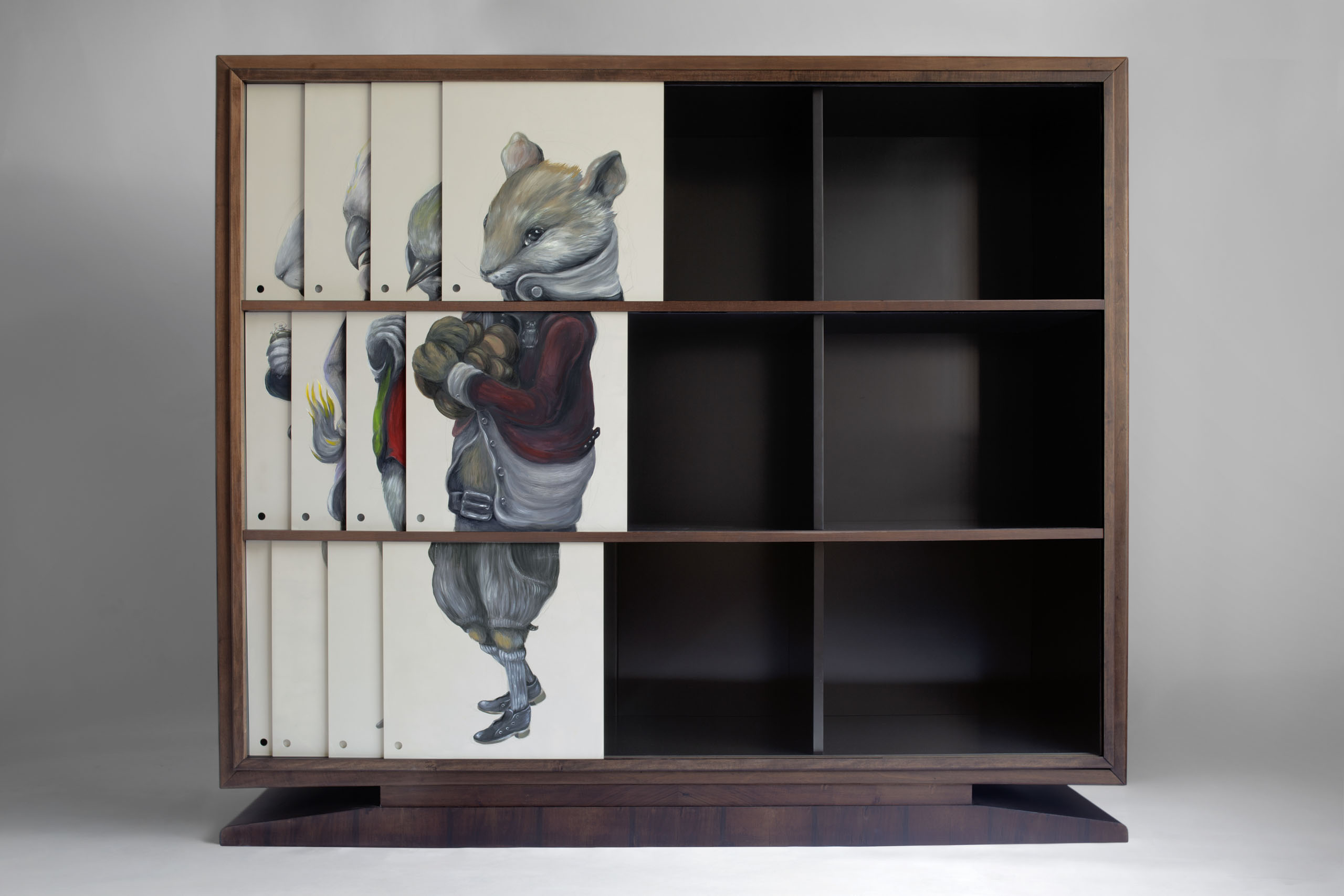
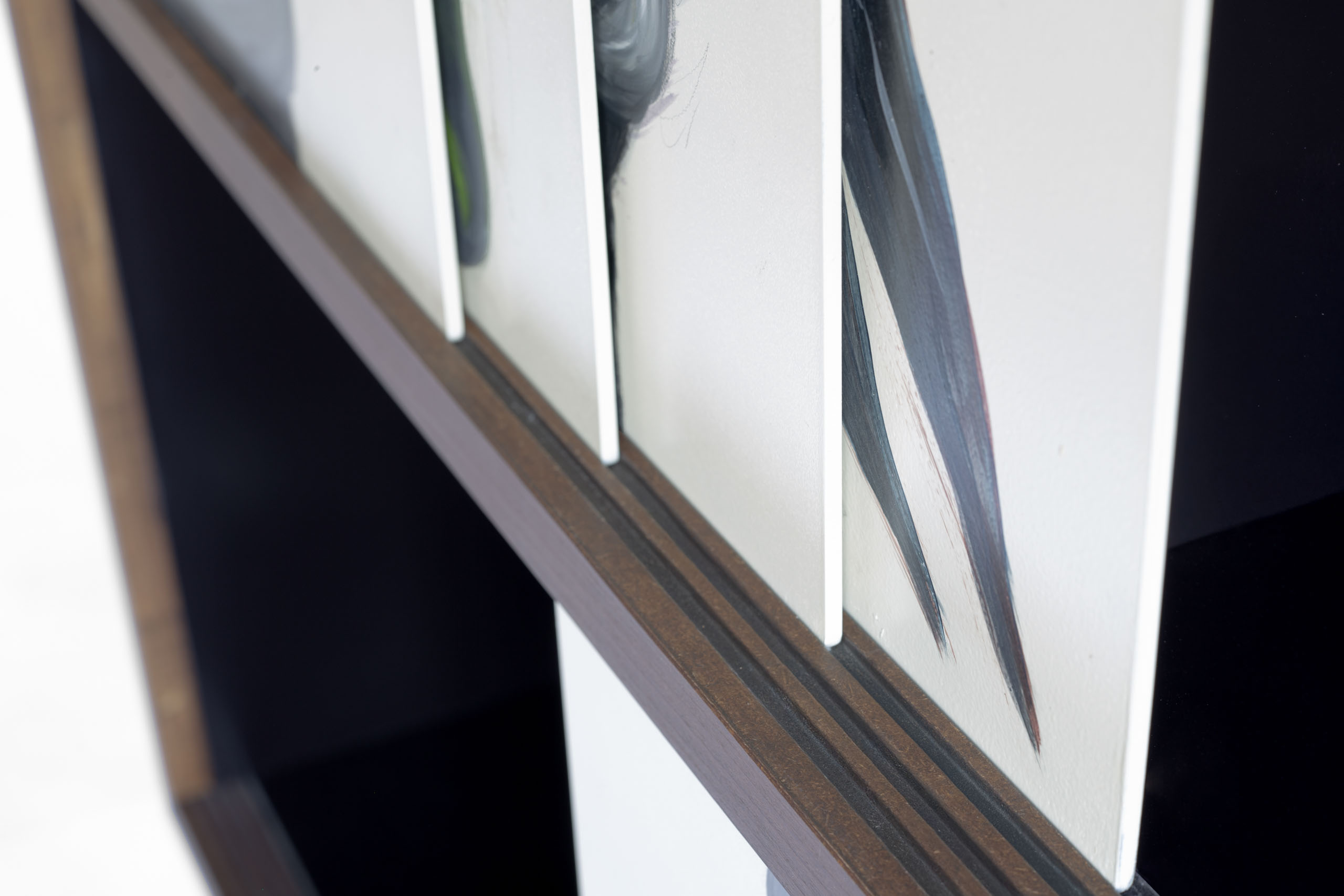
Panels: twelve hand-painted Dibond panels, 53 × 53 cm | 20.9 × 20.9 in each. Sliding across four guides, they transform a fixed image into a changing composition.
Combinations: four heads, four bodies and four pairs of legs generate sixty-four possible characters.
The Bestiary: a robin, a cockatoo, a rabbit and a mouse. Four characters from Ericailcane’s bestiary.
Painting: Ericailcane painted each figure so that heads, bodies and legs can exchange places, generating new characters.
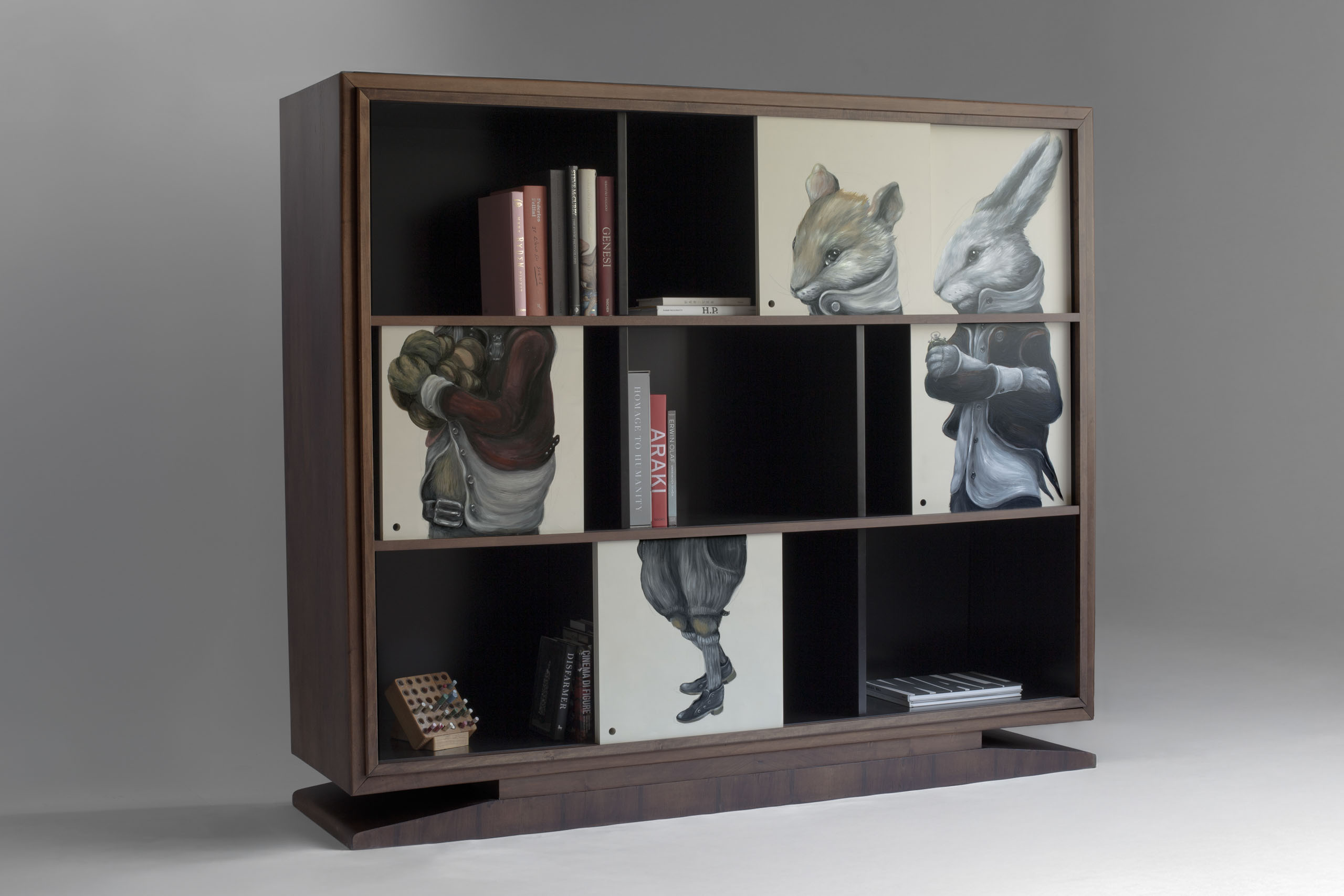
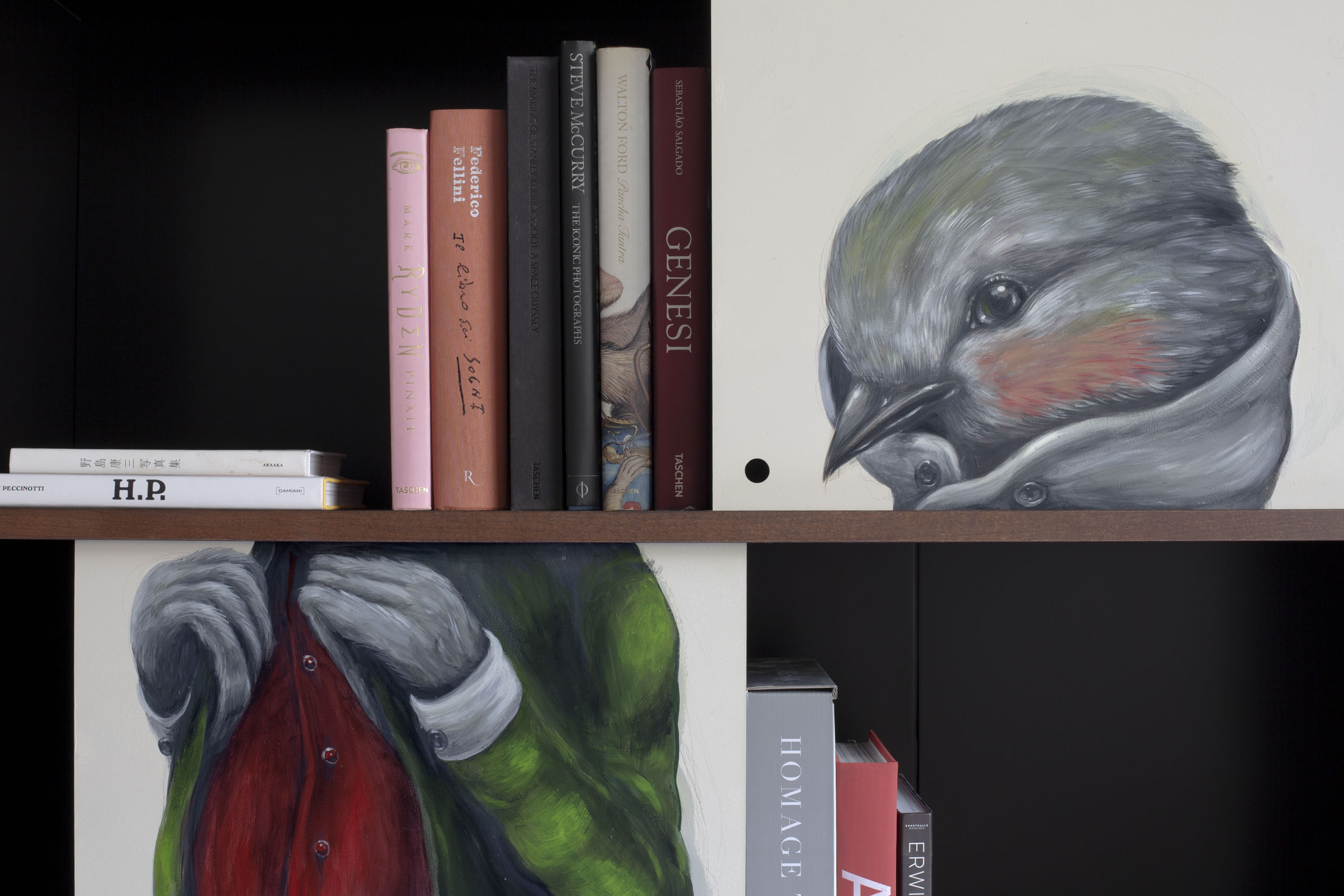
Storage: the wardrobe continues to function as a storage piece. Sliding panels overlap and disappear behind one another, revealing shelves, concealing objects while generating compositions.
Disappearance: panels can slide beyond the visible image, allowing figures to appear, disappear and re-emerge in new configurations.
Sliding guides: custom-milled guides integrated into the structure allow the twelve panels to slide, overlap and reconfigure the image.
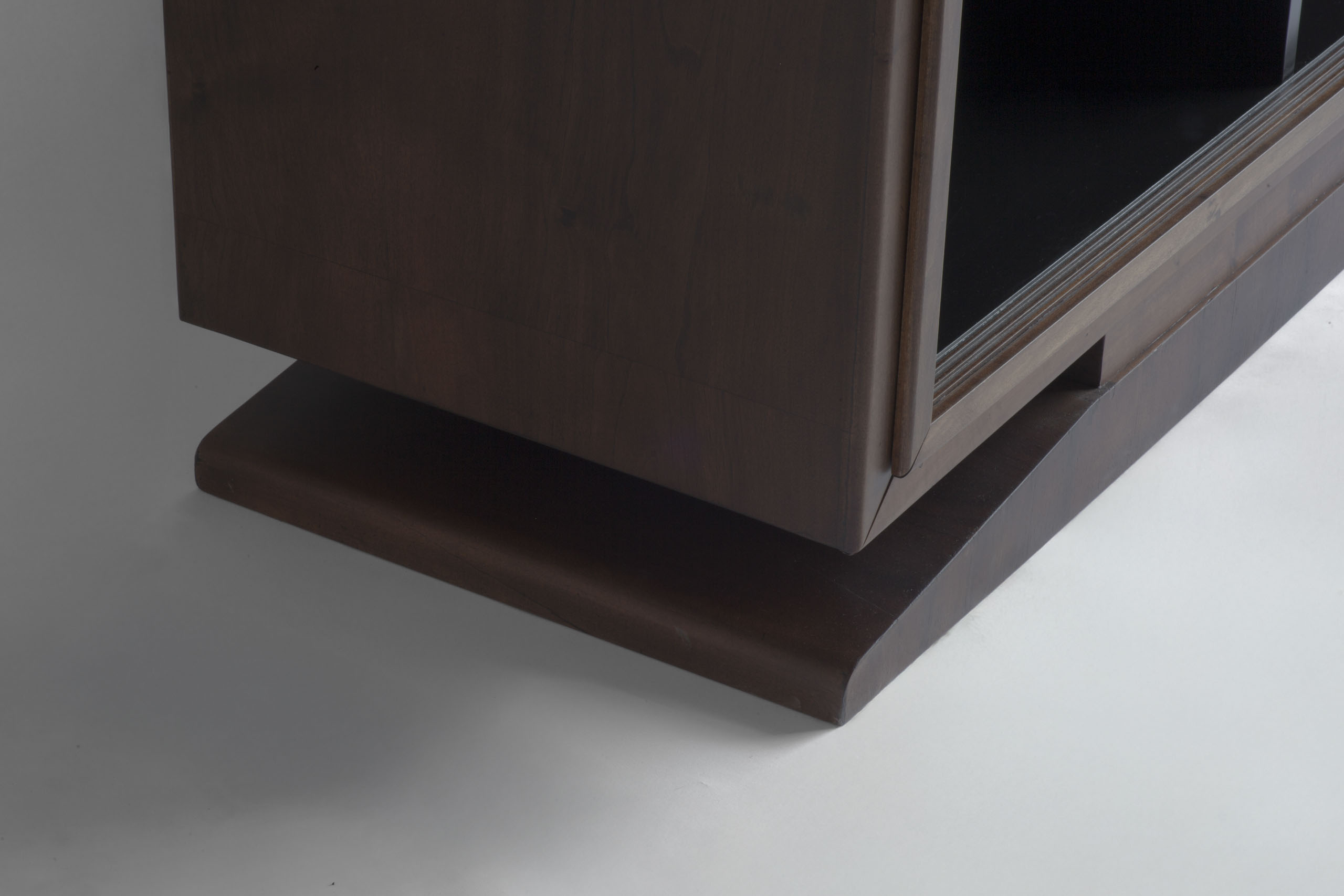
Patina: the restoration was limited to what was necessary. Tonal variations and traces of use remain visible, preserving its history and material character.
Volume: the original cabinet becomes a three-dimensional structure in which image, storage and movement coexist within a single volume.